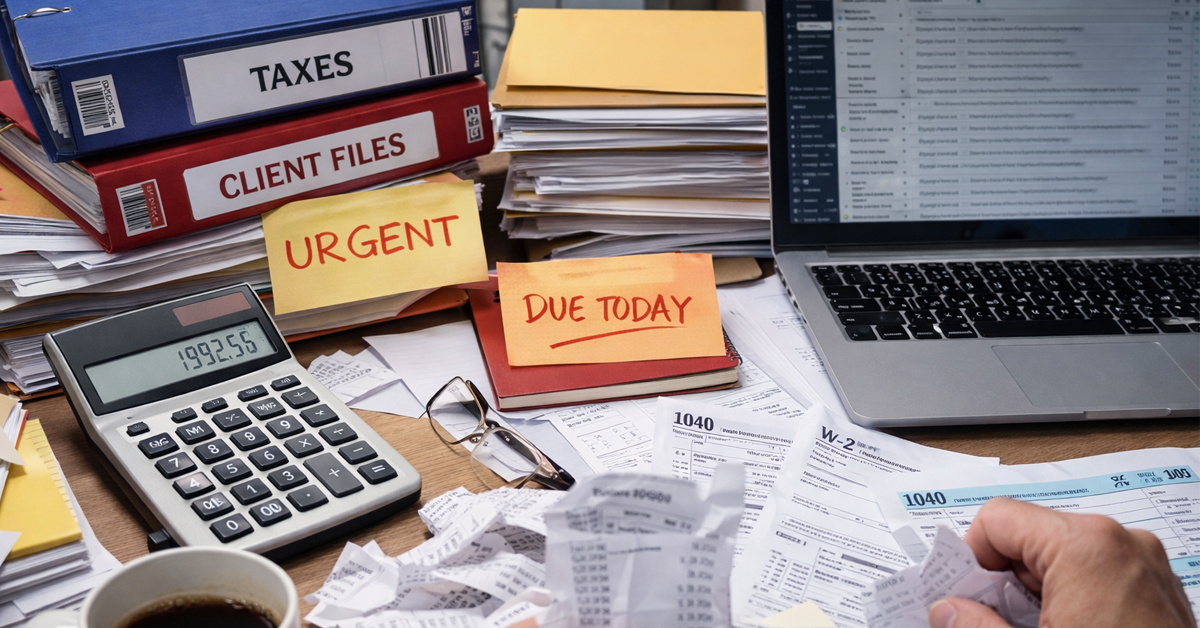

Tax season is peak time for scams.
March brings rapid deadlines and heavy workloads for small and mid-sized businesses, causing teams to work quickly to meet demands.
This creates ideal conditions for phishing attacks.
Security researchers report a 28% increase in tax-themed scam emails during tax season compared to other months. These scams are often subtle, using carefully timed messages that resemble routine correspondence.
Why Tax Season Creates Real Risk
Phishing risk extends beyond accountants. Clients, vendors, and staff are also targeted as they work to meet tax deadlines.
When rushing to meet deadlines, employees may skip essential verification steps. Important documents might be forwarded without review, banking changes accepted without confirmation, or requests fulfilled without verifying authenticity.
This behavior is a common response to high-pressure periods, not carelessness. Scammers take advantage by targeting individuals who are too busy to pause and verify.
What These Emails Actually
These emails are crafted to blend in and avoid detection:
- A note from what appears to be your accountant asking you to resend W-2s.
- A vendor email saying their banking details have changed.
- A DocuSign request for a tax document needing your signature today.
- An urgent request appears to be coming from a senior person in your org.
These scams succeed by exploiting busy work environments where steps are skipped. Many do not require clicking links; they rely on recipients trusting emails at face value.
Four Habits That Reduce Your Exposure
You do not need new software or a dedicated security team to reduce risk. Consistent habits can make a significant difference.
1. Verify payment or banking changes by phone.
If you receive an email about a vendor’s account change, do not reply. Call a known number to confirm the change directly. This habit prevents many costly scams.
2. Treat urgency as a reason to slow down, not speed up.
Review urgent requests, especially those involving financial or sensitive information, with extra scrutiny. Legitimate senders will not object to a brief delay, but scammers often will.
3. Use a second channel to confirm high-stakes requests.
If an email requests sensitive or urgent information, confirm it through another method such as a phone call, text, or in-person check. Taking a moment to confirm can prevent significant issues later.
4. Give your team a quick heads-up.
Let your staff know that targeted scams increase during this season. Encourage them to pause, double-check, and ask questions if something seems unusual. This team culture is a highly effective defense.
Tax season scams are not highly sophisticated. They are effective because they are well-timed and exploit the tendency of busy individuals to make quick assumptions.
You do not need to make major changes. A few intentional habits, combined with a team that values slowing down, are usually enough to avoid becoming an easy target.
_______________________________________________
Need help? Contact The MacGuys+ at 763-331-6227
We support small businesses that run on Macs, iPhones/iPads, and Apple services. Our focus is practical reliability: setup, troubleshooting, maintenance, security basics, and workflow improvements.